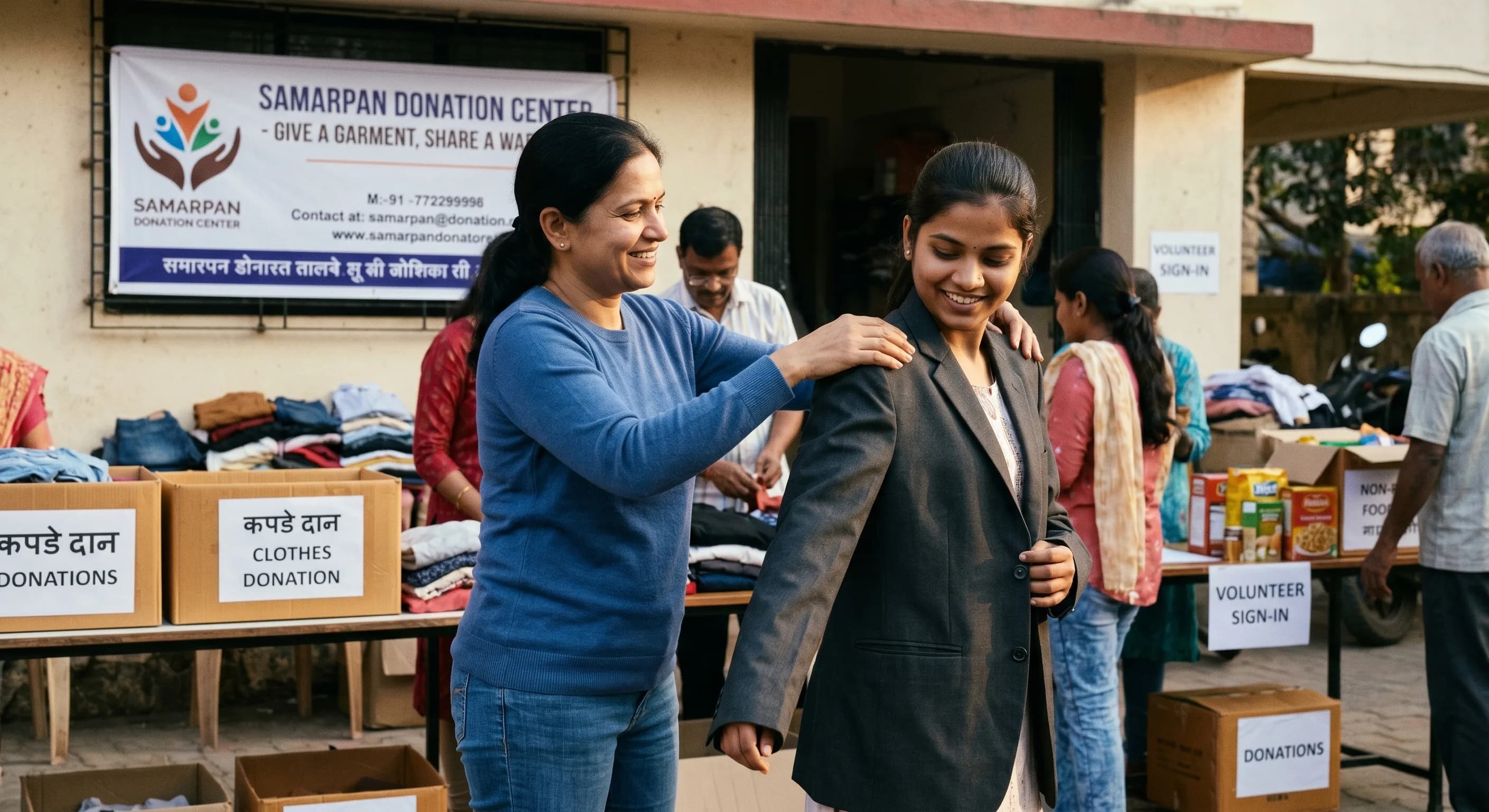
The blazer was slightly too stiff.
Nandini had ironed it the night before, pressing each crease with the careful concentration of someone who had never owned a blazer before and was not entirely sure she was doing it right. She had watched a YouTube video. She had pressed it again in the morning just to be sure.
Now she stood at the glass door of a fourteen-storey office building in Bandra Kurla Complex, the city of Mumbai moving fast and loud behind her, and she looked at her reflection in the door before she pushed it open. She barely recognised herself. Not because she looked different. But because she looked like she belonged here.
A Life of Dignity and Discipline
Her father had been selling chaat outside Dadar station for twenty-two years. He had built a life with those hands. A single room in Dharavi, school fees paid term by term, never ahead and never too far behind - but a life with dignity in it, held together by the discipline of a man who showed up every single day without fail.
Nandini had grown up doing homework on the same table where her mother rolled out dough, memorising history dates to the soundtrack of the street. She had always been sharp. She scored 91% in her Class 12 boards - commerce stream, because science coaching was more expensive and she had not asked her father to find the money for it.
The Question: What Happens Now?
A Bachelor of Commerce from a good Mumbai college cost money Ramesh did not have. Not just tuition - the books, the transport, the laptop that every employer would eventually ask if she had, the three years of lost income while she studied instead of worked.
The Quiet Decision That Changed Everything
Mr. Arvind Menon had been buying chaat from Ramesh Kumar for eleven years. He knew Ramesh by name. He knew there was a daughter - bahut hoshiyaar hai, Ramesh always said. Very smart.
One morning in March - Nandini's Class 12 results had just come out. Ninety-one percent. Commerce. Arvind Menon took his pani puri and walked to the station. He thought about it all day.
That evening, he read about a verified educational trust that funded higher education for students from low-income households. He called the trust. He asked what a three-year B.Com sponsorship looked like. They told him. He said yes.
The Ripple Effect
Because here is what one sponsorship - one phone call, one man's quiet decision to say yes - actually set in motion:
- The year Nandini joined her first job, her younger brother Akash stopped selling newspapers in the morning. His marks improved almost immediately.
- Two years later, Nandini paid for Akash's Class 11 and 12 science coaching. He wanted to be an engineer. She made sure that wanting was enough.
- Three years after that, she helped her parents move out of Dharavi into a small but proper one-bedroom flat in Ghatkopar.
When Akash graduated and got a job, his first significant act with his salary was to donate to the same educational trust that had funded his sister. He wrote in the remarks field: For the next Nandini.
The Point of Anonymous Giving
Arvind Menon still buys chaat from Ramesh Kumar. He does not know about the flat in Ghatkopar, or the daughter in BKC, or Akash in engineering college. The trust never told him. That is policy.
The whole point of giving through a verified system - anonymously, accountably, without expectation - is that the impact moves forward without you. The ripple does not need to know where it came from. It just keeps moving.