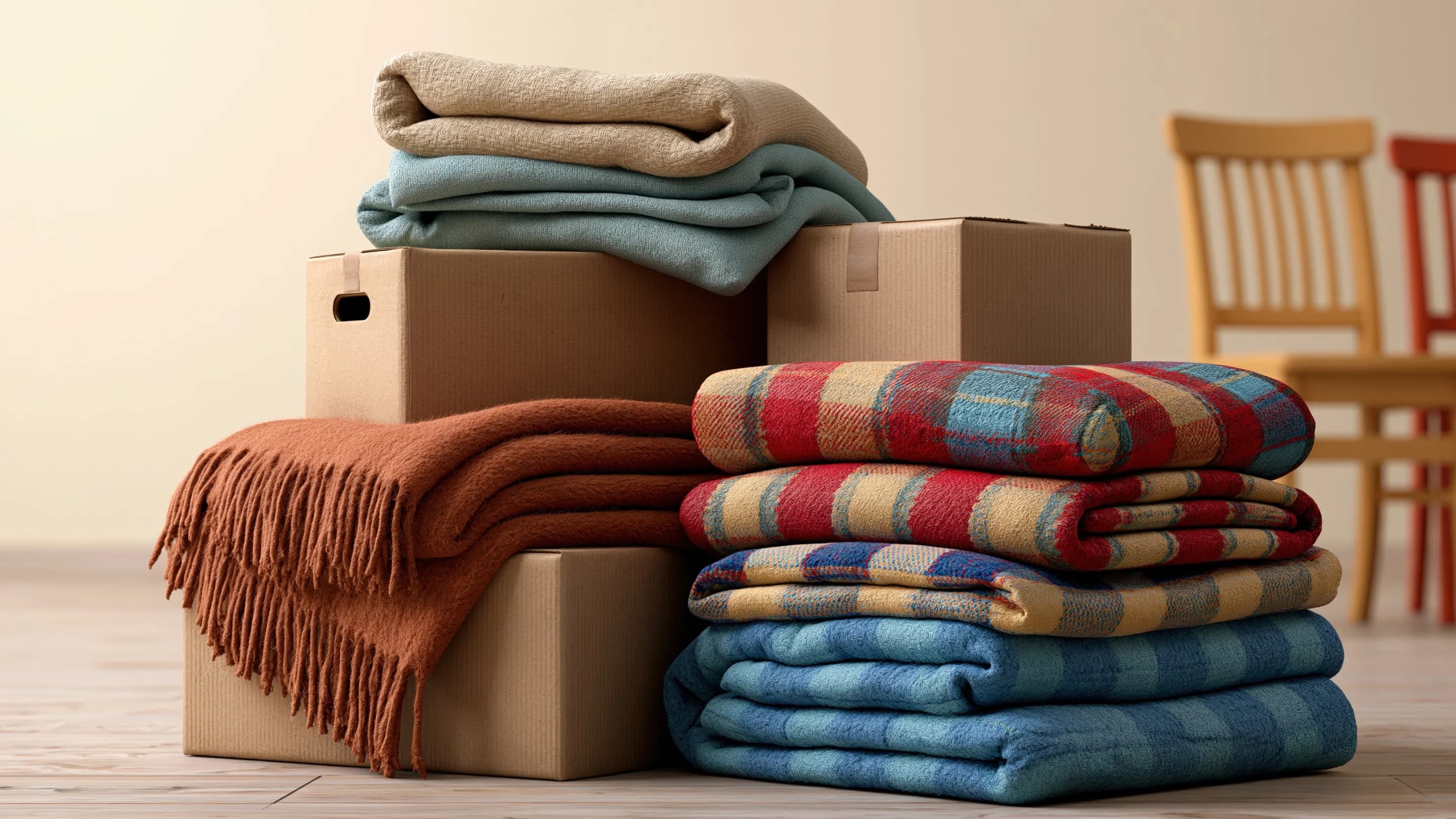
There is a corner in almost every Indian home. You know the one. The shelf that's become a graveyard for things you meant to sort through. The cupboard that hasn't been fully opened in months. The box in the store room that's moved three times across three homes and has never actually been unpacked.
Inside that corner, there are things that still work. Things that still have life in them. Things that - if you're honest - you are never going to use again.
And somewhere in your city, a few kilometres away, there is a family that needs exactly one of those things today. Not someday. Today.
This is not a blog about minimalism or decluttering. It's not about organising your home or living with less. It's about something much simpler and much more powerful: The stuff you've stopped seeing has the power to change someone's life - if it can just find its way to the right person.
The Clutter Problem Nobody Talks About
India is a country of extraordinary resourcefulness. We fix things instead of replacing them. We pass things down. We find second and third lives for objects that other cultures would discard without a thought.
And yet - we also accumulate. Quietly, steadily, without realising it.
The children grow up and leave behind a trail of school bags, uniforms, textbooks, and toys. The phone gets upgraded and the old one goes into a drawer. The laptop slows down and gets replaced, but the old one still works fine. The clothes no longer fit, but they're too good to throw away, so they sit folded in a bag that never quite makes it anywhere.
According to estimates, millions of tonnes of perfectly usable goods sit idle in Indian homes every year - while an equal number of families in the same cities go without those very things.
This is not a failure of generosity. Indians are among the most generous people in the world. It's a failure of connection. The people who have are not connected to the people who need. The items that are available are not matched with the requests that exist.
CauseKind's In-Kind platform is built to fix exactly that.
What "Household Clutter" Actually Looks Like as Community Impact
Let's make this real. Let's walk through your home together.
The Study Room or Children's Bedroom
That stack of textbooks from two years ago. The set of storybooks your child devoured at age seven and hasn't touched since. The geometry box, the colour pencils, the half-used notebooks.
What you see: Old stuff taking up shelf space.
What a child nearby sees: The books they need for the school year they're about to start. The notebook they couldn't afford. The colour pencils they've never had.
One family's "done with this" is another child's entire academic toolkit.
The Wardrobe
The school uniforms your child outgrew in the middle of the year. The sweater that's still perfectly warm but no longer fits. The shoes that were barely worn before the feet they belonged to grew two sizes.
What you see: Things that don't fit anymore.
What another child's parent sees: The uniform they've been trying to figure out how to afford. The warm layer their child needs this winter. The shoes that will let their child walk into school feeling like they belong.
Clothes carry emotion. When a child wears something that fits, that's clean, that looks good - they stand a little taller. That matters.
The Store Room or That Drawer
The old smartphone, replaced by a newer model six months ago. The laptop that's "a bit slow" but absolutely still functional. The tablet you upgraded from. The chargers and earphones in a tangled pile.
What you see: Old tech, outdated, not worth much.
What a student nearby sees: The device that would let them attend online classes. The laptop they need to submit assignments. The phone that connects them to their school's learning portal.
In today's India, not having a device is not an inconvenience - it is an educational emergency. One of your old phones could be the difference between a student keeping up and falling behind.
The Toy Shelf or the Box Under the Bed
The board games with all the pieces still intact. The building blocks your youngest has completely lost interest in. The picture books, the puzzles, the soft toys in good condition.
What you see: Things your kids have outgrown.
What a younger child in your neighbourhood sees: Wonder. Play. Learning. Joy.
Young children learn through play. Every puzzle solved, every block stacked, every story heard is a building block of language, reasoning, and creativity. These are not luxuries. They are tools - and right now, they are sitting under your bed.
Why "I'll Donate Someday" Becomes Never
Here is something most of us know about ourselves: the intention to donate is almost always there. The follow-through is where it breaks down.
Why?
- Because the process feels complicated. You think about finding the right NGO, figuring out drop-off points, worrying about whether items will actually reach someone or end up in a warehouse.
- Because you're not sure your items are good enough. You wonder if that slightly worn bag or the textbook with highlighted passages is even worth donating.
- Because there's no obvious next step. The goodwill is there. The moment passes. The bag stays in the corner.
CauseKind was built to remove every single one of these friction points.
You can see exactly who needs what - right now, in your area. Real people. Real requests. Admin-verified before they go live. No vague "drop it in a box" moment - a specific match, a real family, a clear handoff.
Your items don't need to be perfect. They need to be usable. A bag that's slightly scuffed is still a bag. A textbook with notes in the margins is still a textbook. A phone that's two generations old still makes calls and runs apps.
The next step is always obvious. Browse requests. Match one. List your item. Arrange a 10 km local drop-off. Done. Your clutter has become someone's essential.
The 10 km Truth: Your Community Needs You Specifically
There is something important about the way CauseKind matches in-kind donations.
Every match is made within 10 kilometres of your home.
This is not just a logistical convenience - though it is that too, because it means no shipping, no couriers, no cost. It's a statement about what community actually means.
The family who needs your child's old school bag is not an abstract face in a charity brochure. They are in your neighbourhood. They shop at some of the same markets you shop at. Their child may go to a school not far from yours. They are your community in the most literal sense of the word.
When you donate locally, you're not just giving an item. You are investing in the place where you live. You are making your own neighbourhood stronger, more connected, more human.
That is not a small thing. That is what community change actually looks like - not grand gestures, but a thousand small acts of giving between neighbours who finally found a way to find each other.
The Moment It Stops Being Clutter
There is a specific moment that CauseKind donors describe, and it's remarkably consistent.
It's the moment they match their donation to a specific request. When they see a post from a parent in their area asking for a Class 7 science textbook - and they have exactly that on their shelf. When they list a school bag and within a day, someone nearby has accepted the offer.
In that moment, the object transforms.
It stops being the bag in the corner. It becomes the bag a child will carry to school on Monday morning.
It stops being the old laptop taking up space. It becomes the device a student will use to submit her assignment on time.
It stops being clutter. It becomes impact.
And the thing is - you didn't have to spend anything extra. You didn't have to find extra money or extra time. You just had to look at what you already had with new eyes.
How to Turn Your Clutter Into Community Change Today
It takes less than ten minutes to get started.
- Step 1 - Do a quick walkthrough of your home: Spend five minutes looking at your study, wardrobe, store room, and that one drawer. You are looking for: books, bags, clothes, uniforms, shoes, old devices, toys, games, stationery.
- Step 2 - Browse what people near you actually need: Go to causekind.com/requests - these are real, admin-verified in-kind requests from families within your area. See if anything you found matches what someone is asking for.
- Step 3 - Create your free CauseKind account: It's instant. No fees. No complicated process.
- Step 4 - List your item or match an existing request: Post what you have, or directly respond to a specific request. Everything is verified, so you know it's going somewhere real.
- Step 5 - Arrange your local drop-off: Within 10 km. No courier. No cost. A simple, human handoff.
- Step 6 - Receive your Impact Certificate: After your item is delivered, CauseKind sends you a verified certificate - proof that your giving made it all the way to the person who needed it.
One Last Thought
We spend so much time thinking that making a difference requires something extraordinary - a large sum of money, a dramatic act, a life-changing decision.
But most of the world's quiet good is done by ordinary people looking around and asking a simple question: What do I have that someone else needs?
You have that thing. It's in the corner. It's on the shelf. It's in the drawer you meant to sort through. The community around you is asking for it.
Today is a good day to finally do something about that corner.