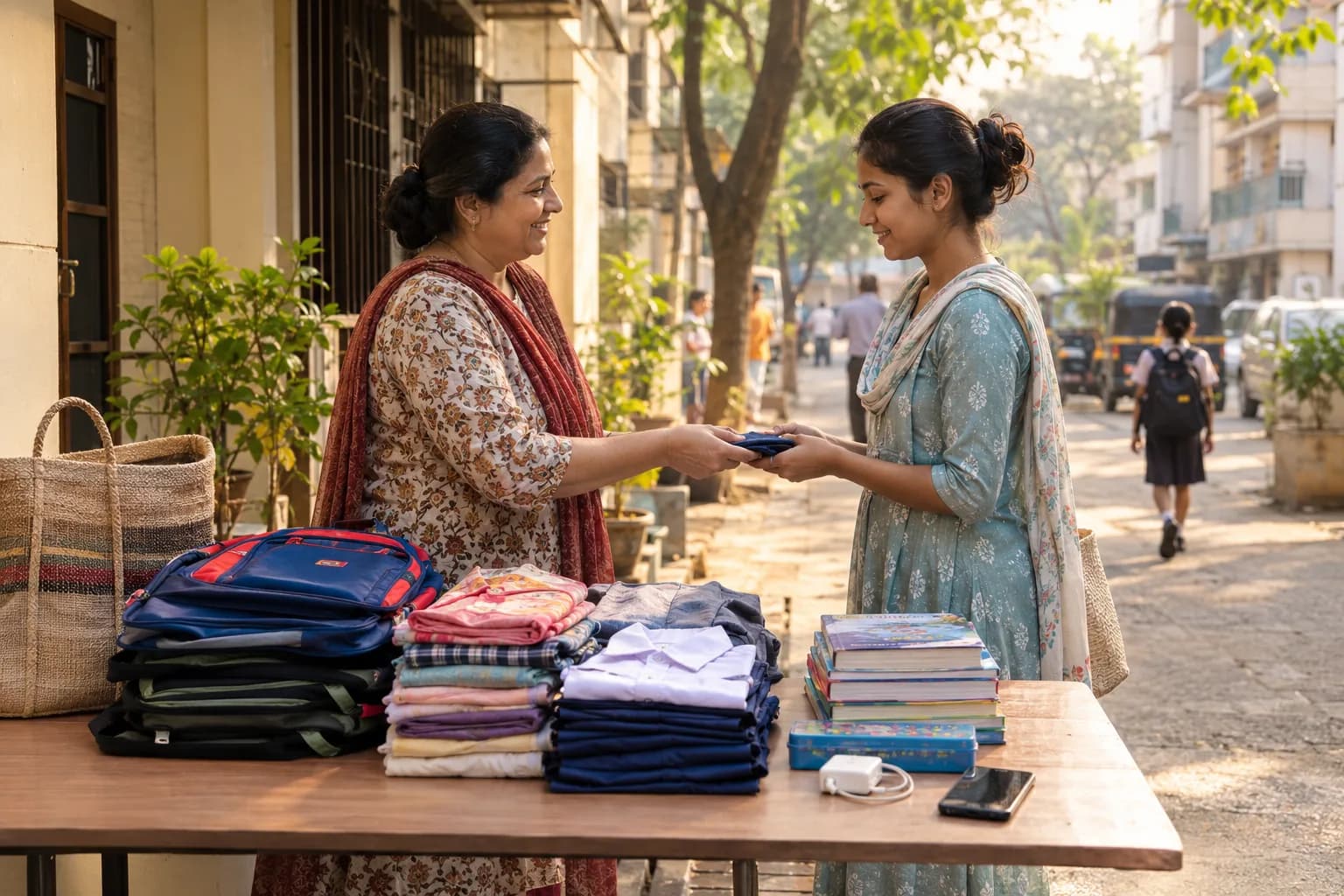
Every year, Indians donate billions of rupees to causes they care about. Food drives, flood relief, school supply campaigns, clothing collections - the instinct to give is deeply woven into Indian culture.
But there is a form of giving that is older than cash, more direct than a bank transfer, and in many situations more impactful than money - and it is one that most people in India do not fully understand or use.
It is called in-kind donation.
And in 2026, with verified platforms making local matching possible in minutes, in-kind giving is undergoing a transformation that is changing how communities across India support each other.
This is the complete guide - everything you need to know about what in-kind donations are, why they matter, what to donate, how to find the right recipient, how to donate safely, and how CauseKind's verified platform makes it simpler than it has ever been.
What Is an In-Kind Donation?
An in-kind donation is a non-cash contribution - a physical good, a professional service, or a resource - given directly to a person or organisation in need.
Instead of donating money and letting an organisation decide how to spend it, an in-kind donor gives the actual item that is needed: a school bag, a set of textbooks, a laptop, a raincoat, a pack of sanitary pads, a geometry box.
The word 'in-kind' comes from the phrase 'payment in kind' - meaning payment in goods rather than currency. In the context of charitable giving, it means giving the thing itself rather than the means to acquire it.
In-kind donations can be:
- Physical goods: clothes, books, electronics, stationery, food, medical supplies, furniture
- Professional services: legal advice, medical consultations, accounting support, teaching
- Use of resources: office space, vehicles, printing facilities, storage
This guide focuses primarily on physical goods - the most common and most needed form of in-kind donation in India.
Why In-Kind Donations Matter in India
India is a country of extraordinary resource inequality. Urban Indian households accumulate goods at a rate that outpaces their use - clothes that no longer fit, books that will not be re-read, devices that have been replaced, toys that have been outgrown.
At the same time, millions of families across the country - in informal urban settlements, in rural areas, in government schools, in shelter homes - need these very things and cannot afford them.
The gap between the two is not a shortage of goods. It is a shortage of connection.
In-kind donation closes that gap directly, without the inefficiencies of cash-based giving:
- No administrative overhead: the item you donate is the item received
- No disbursement delay: a matched in-kind donation moves within days, not months
- No uncertainty about spending: you know exactly what your donation provides
- No minimum amount: a single notebook, a pair of rubber chappals, one pack of sanitary pads - every item has value
For India specifically, in-kind giving aligns with a cultural tradition of direct, community-centred generosity that predates modern philanthropy.
The Most Needed In-Kind Donation Categories in India
Not all in-kind donations are equally needed or equally impactful. Here is a breakdown of the most requested categories on CauseKind's platform and across India's verified NGO network:
Education and Stationery (Most Requested)
- School bags and backpacks
- Textbooks (CBSE, ICSE, State Board - by class and subject)
- Notebooks, graph paper, drawing sheets
- Geometry boxes, rulers, calculators
- Pens, pencils, erasers, sharpeners
- Past year question papers and revision guides
Clothing and Footwear
- School uniforms (cleaned, in wearable condition)
- Everyday children's clothing in standard sizes
- Raincoats and waterproof ponchos (peak demand: May–July)
- Rubber chappals and monsoon footwear
- Winter clothing (October–January)
- New undergarments and socks (new only, sealed)
Electronics and Devices
- Working smartphones with chargers
- Laptops and tablets with chargers
- Earphones and accessories
Hygiene and Health
- Sanitary pads (sealed, new packs)
- Soap, toothbrushes, toothpaste
- Antifungal products (monsoon season)
Household and Furniture
- Tarpaulins (for flood-prone households)
- Plastic storage containers
- Basic furniture (chairs, desks, almirahs)
Books and Reading
- Story books and novels in regional languages
- Picture books for young children
- Reference books and dictionaries
How In-Kind Donation Works on CauseKind
CauseKind's In-Kind platform is built on one core principle: the person who has and the person who needs should be able to find each other simply, safely, and at zero cost.
Here is the complete process:
Step 1 - A recipient posts a verified request
Families, individuals, schools, shelter homes, and community organisations post specific in-kind requests: the exact item needed, the size or specification, the location. Before any request goes live, CauseKind's admin team verifies the identity and need through its four-tier verification framework.
Step 2 - You browse requests near you
Every request on CauseKind is location-tagged. You see requests from within your 10 km radius - real, specific, verified needs from your neighbourhood.
Step 3 - You match a request or list your item
You can either respond to an existing request (offering the item someone has asked for) or list an item you want to donate (and wait for a matching request). Both paths are available.
Step 4 - You arrange a local handoff
All matches are within 10 km. No courier, no shipping, no cost. You and the recipient arrange a direct, local handoff - in person, at a time that suits both.
Step 5 - Delivery is confirmed and documented
Both parties confirm the handoff through the platform. A verified Impact Certificate is generated - a permanent, documented record of your donation, the recipient, and the confirmed delivery.
Cost: Zero. Always.
What Makes a Good In-Kind Donation
The difference between a helpful donation and a burdensome one comes down to condition, relevance, and dignity.
Condition
Donate items that are genuinely usable - not items that you have decided are charitable enough to give away. A shirt with a torn collar is not a donation. A phone that does not turn on is not a donation. A textbook from a syllabus that changed five years ago is not a donation.
The test: would you be comfortable giving this item to a colleague you respect?
Relevance
Before donating, check what is actually needed. A school uniform is not useful if the recipient's school requires a different style. A Class 10 CBSE textbook is not useful to a Class 8 State Board student. CauseKind's verified request model solves this problem by showing you exactly what specific people near you actually need.
Dignity
Donate items that allow the recipient to feel good receiving them. Clean. Intact. Appropriate. The manner in which something is given communicates something about how the giver sees the receiver.
The 10 km Matching Principle: Why Local Giving Changes Everything
CauseKind matches every in-kind donation within a 10 km radius of the donor.
This is not just a logistics decision - though it makes logistics simple. It is a philosophy about what community giving should look like.
When you give within your neighbourhood:
- No shipping or courier is required - reducing cost and delay to zero
- You know where your donation went - the Impact Certificate confirms a local delivery
- You are investing in the community you live in - making your own neighbourhood stronger
- The recipient is truly your neighbour - someone who shops at similar markets, whose children may go to a nearby school
Hyperlocal giving is more efficient, more personal, and more community-building than giving to a national pool. It is also, research suggests, more emotionally satisfying for donors - the connection between giver and receiver is proximate and real.
In-Kind Donation vs. Cash Donation: Which Is Right When?
Both forms of giving are valuable. The question is which is right for which situation.
When in-kind donation is better:
- When you know exactly what is needed (a specific book, a specific device, a specific clothing item)
- When the need is immediate and a cash transfer would take weeks to convert to goods
- When you have a specific item that matches a specific verified request
- When you want absolute certainty about what your giving produces
When cash donation is better:
- When the need is complex and an organisation is better placed to determine priorities
- When you are supporting disaster relief where needs change rapidly
- When you are contributing to a large infrastructure or programme goal that requires pooled funding
For most everyday community needs - education, clothing, hygiene, basic household items - in-kind giving through a verified platform is the most direct, most efficient, and most impactful form of giving available.
Common Questions About In-Kind Donations in India
Can I get a tax deduction for in-kind donations?
The 80G tax deduction under the Income Tax Act applies to monetary donations. In-kind donations of goods do not directly qualify for 80G deduction unless there is a monetary outflow associated with the donation (such as purchasing goods specifically to donate). Consult your CA for advice specific to your situation.
Does in-kind donation count as CSR under Section 135?
Purchasing goods specifically for in-kind donation as part of a CSR programme counts as eligible CSR expenditure. Donating surplus or depreciated assets that have ₹0 book value does not count toward mandatory 2% spend but produces strong ESG documentation.
How do I know my donation actually arrived?
On CauseKind, every confirmed in-kind donation generates a verified Impact Certificate - produced only after mutual delivery confirmation by both donor and recipient. This is independent verification, not self-reporting.
What if I have items to donate but nobody has requested them?
List your items on CauseKind's platform. Verified recipients in your area can browse available items and request what they need. Most listed items are matched within 7 to 14 days.
Is there a minimum value or quantity for in-kind donations?
No. A single notebook, one pair of chappals, one pack of sanitary pads - every item is valuable if it is in good condition and matches a verified need.
How to Start Your First In-Kind Donation on CauseKind
Starting is simpler than most people expect.
- Go to causekind.com and create a free account - takes 2 minutes
- Browse In-Kind Requests in your area - filter by category, distance, or need type
- Find a request that matches something you have or can easily purchase
- Accept the match or list your item
- Arrange a local handoff with the recipient - within 10 km, at a time that works for both
- Confirm delivery through the platform
- Receive your verified Impact Certificate
Your first in-kind donation can be complete within a week of reading this guide.
Frequently Asked Questions
What is an in-kind donation in India?
An in-kind donation in India is a non-cash contribution of physical goods - such as clothes, books, electronics, food, or stationery - given directly to a person or organisation in need, instead of donating money.
What are examples of in-kind donations?
Examples of in-kind donations include school bags, textbooks, laptops, smartphones, clothes, uniforms, sanitary pads, blankets, raincoats, furniture, and food supplies - any physical item donated to someone who needs it.
Is in-kind donation tax deductible in India?
Direct in-kind donations of goods are generally not eligible for 80G tax deduction. However, purchasing goods specifically for donation as part of a CSR programme may qualify as eligible CSR expenditure. Consult a qualified CA for specific guidance.
How does CauseKind's in-kind donation platform work?
CauseKind matches donors with verified recipients within 10 km. Recipients post specific in-kind requests that are admin-verified before going live. Donors browse local requests, offer matching items, arrange a direct handoff, and receive a verified Impact Certificate confirming delivery.
What is the difference between in-kind and monetary donation?
A monetary donation gives an organisation cash to spend as they determine. An in-kind donation gives a specific, needed item directly - with no administrative overhead, no disbursement delay, and complete transparency about what the donation provides.
In-kind giving is not a lesser form of charity.
For the student who needs a specific textbook before exams start next week, a cash donation to a general education fund is not what is needed. The book is what is needed.
For the family in a flood-prone area whose tarpaulin gave way in June, a monetary transfer that will clear in three days is not what is needed. The tarpaulin is what is needed.
In-kind giving is the most direct line between what you have and what someone else needs.
In 2026, verified platforms make that line shorter than it has ever been.
Your first donation is waiting for you.
Browse In-Kind Requests Near You → List Items You Want to Donate → Create Your Free CauseKind Account → Read: Benefits of In-Kind Donations → Read: How Local Donation Matching Works →
CauseKind is India's verified giving platform. Zero fees. Admin-verified listings. Every donation matched within 10 km and tracked to delivery.