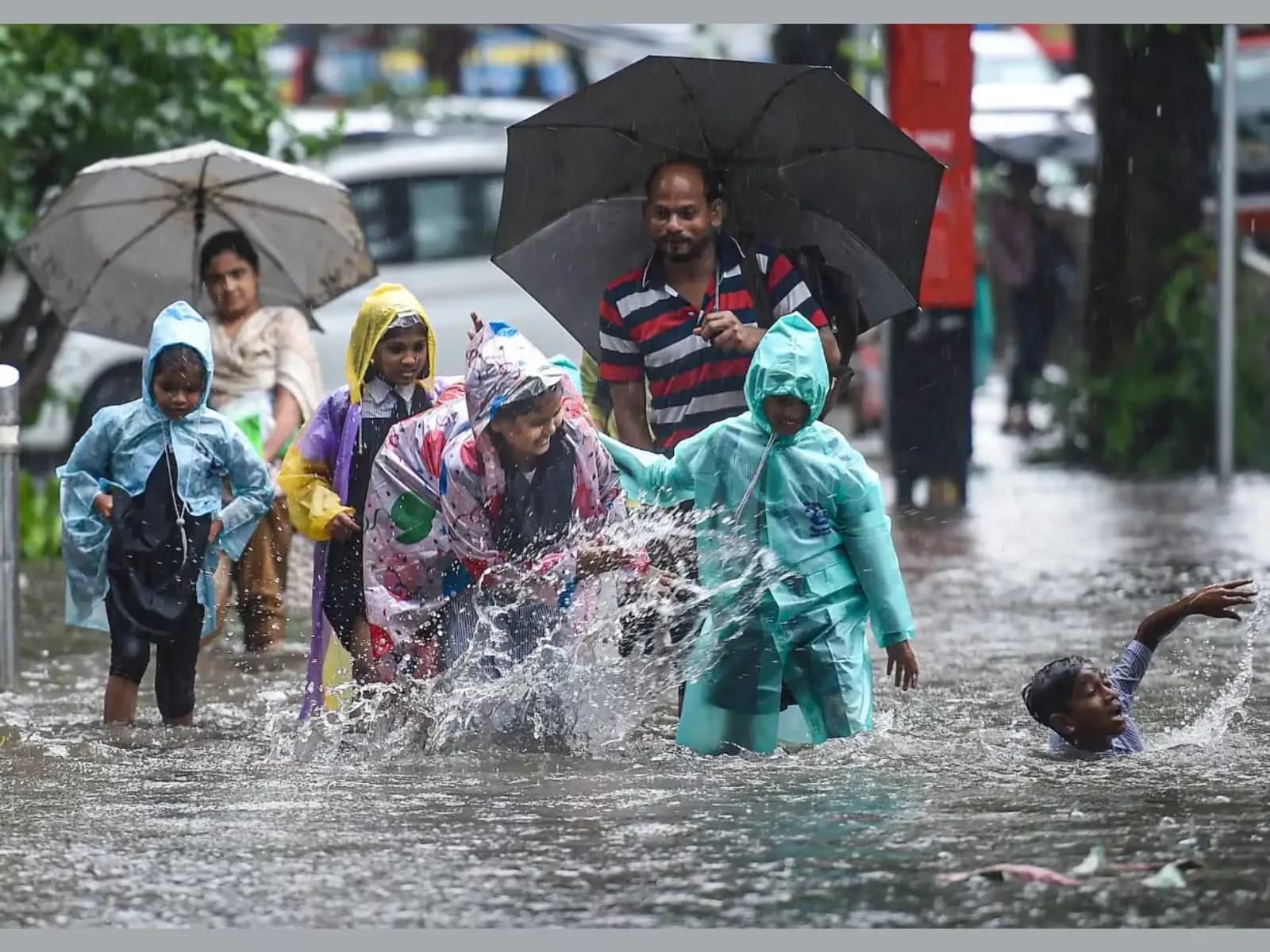
Every year, sometime in late May, the donation drives start winding down. The school term collection drives - bags, books, uniforms - wrap up in April. The summer charity events close in May. The NGOs post their thank-you updates. The volunteers pack up the collection boxes. And then the monsoon arrives. The rain comes down. The streets flood. Children walk to school through ankle-deep water in canvas shoes that dissolve. Families living in one-room chawls watch the corner where the ceiling leaks. Girls stuff plastic bags inside their school bags trying to keep their textbooks dry. Boys arrive at school with wet uniforms that will not dry before the next morning. And nobody is running a donation drive for any of it. The children who need them most go without, season after season, year after year, because the timing of generosity in India does not match the timing of need. This blog is about closing that gap. It is a complete, specific guide to what monsoon giving looks like - what to donate, who needs it, when to give it, and how to make sure it reaches someone in time to actually matter this season.
Why the Monsoon Creates a Unique and Urgent Set of Needs
The monsoon is not just rain. For families living in informal settlements, chawls, and low-lying areas across India, it is a season-long endurance event.
A family living in a pucca house in a good neighbourhood experiences the monsoon as inconvenience - wet commutes, humidity, an umbrella to remember.
A family living in a one-room tenement in a low-lying area experiences the monsoon as a three-month emergency - flooding, mould, water entering the home, children missing school because their clothes will not dry, shoes rotting from the inside out before the season is halfway done.
The specific needs that the monsoon creates are different from the needs of any other season. And they are almost entirely absent from India's donation ecosystem.
The School Attendance Problem Nobody Tracks
Here is a fact that deserves more attention than it receives:
School attendance among children from low-income households drops measurably during the monsoon months.
It drops because:
- A child with no waterproof bag arrives at school with wet books and cannot participate properly in class
- A child with no raincoat or umbrella gets thoroughly soaked walking to school - and if the school does not have spare clothes, goes home
- A child with no rubber footwear develops fungal infections from wet canvas shoes worn every day for weeks
- Parents in areas prone to flash flooding keep children home on heavy rain days because the route to school is genuinely unsafe when ankle-deep
None of these reasons show up in official attendance data as "monsoon-related." They show up as "absent" - and the learning gaps they create compound through the rest of the academic year.
A waterproof bag and a pair of rubber chappals are not comfort items. They are attendance infrastructure.
The Monsoon Giving Guide: What to Donate, June Through September
Here is a complete, specific guide to what is actually needed, organised by category and urgency.
🎒 Waterproof and Rain-Resistant School Bags
Why they matter: A standard school bag - canvas, nylon, or fabric - provides almost no water resistance in moderate to heavy rain. Textbooks, notebooks, and stationery inside get wet, warp, and in some cases become unusable. For a child who has been given donated books for the year, losing them to a week of rain in July is devastating - and there is no mechanism to replace them mid-term.
What to donate:
- Waterproof or water-resistant backpacks with a rain cover
- Bags with coated nylon or polyester outer material
- Bags that come with an integrated or separate rain cover
- Dry bags or waterproof pouches that can be used inside any bag to protect books
What NOT to donate:
- Canvas bags with no water resistance
- Fabric bags that absorb water
- Bags with broken zippers or torn lining - water enters through gaps
Where to find them: Water-resistant school bags are available at most large retail stores and online platforms from ₹300 to ₹800. Dry bags and waterproof pouches are available at trekking and outdoor supply stores from ₹150.
Seasonal tip: If you are buying a monsoon bag specifically to donate, look for the term "rain cover included" or "water-resistant" on the packaging. Do not assume all school bags provide meaningful rain protection - most do not.
🧥 Raincoats and Waterproof Ponchos
Why they matter: An umbrella requires a free hand. A child carrying a school bag and a lunch box cannot use an umbrella effectively. An umbrella does not protect the lower body. In heavy rain, an umbrella is almost useless against wind-driven rain.
A raincoat or poncho covers the child from neck to knee, leaves both hands free, and can be folded and stored in the school bag when not needed.
For children in low-income households, a raincoat is not a standard purchase. It is an additional expense that comes on top of all the school-related costs already paid at the start of the term. It almost always gets skipped.
The result: children walking to school in the rain wearing their school uniform directly, arriving wet, sitting in wet clothes for hours, developing coughs, missing school.
What to donate:
- Children's raincoats in good condition - sizes for ages 5 to 16
- Waterproof ponchos - these are particularly practical as they fit over a school bag
- Adult raincoats for parents who walk children to school or work outdoors
- Rain covers for bags, if donating a bag that does not come with one
What NOT to donate:
- Raincoats with broken snaps, missing buttons, or torn seams - these allow water in
- Very thin plastic ponchos that tear after one use - these are not a useful donation
- Raincoats that are mouldy or smell from improper storage - clean and dry only
How to donate new: A basic children's raincoat costs ₹200 to ₹500 at most retail stores. A poncho that fits over a school bag costs ₹150 to ₹350. These are among the most affordable meaningful donations you can make this season.
👟 Rubber Footwear: The Most Under-Donated Monsoon Essential
Why this is critical: Canvas shoes - the standard school shoe for children in India - are the single most monsoon-incompatible piece of clothing that exists.
They absorb water immediately. They take 24 to 48 hours to dry in monsoon humidity. They develop mould and odour within a week of continuous wet use. Worn while wet every day for three months, they cause fungal skin infections - athlete's foot, ringworm, and related conditions - that are common, persistent, and in some cases painful enough to affect walking.
Children from low-income households typically own one pair of shoes. That one pair is their school shoes. There is no rotation. There is no spare pair.
Rubber chappals, flip-flops, and gum boots are the correct monsoon footwear - they do not absorb water, they dry instantly, they resist fungal growth, and they can be cleaned with a splash of water.
What to donate:
- Rubber chappals and flip-flops - children's and adult sizes
- Gum boots / rubber boots - especially for children in areas with significant flooding
- Waterproof sandals with rubber soles
- New socks - cotton socks get wet and stay wet: but for children who must wear shoes, a spare pair of dry socks mid-day makes a genuine difference
What NOT to donate:
- Canvas shoes
- Leather shoes
- Fabric sandals
- Any footwear that absorbs and retains water
Size guidance: Children's rubber chappals are needed across the size range from approximately size 2 (for a 5-year-old) to size 8 (for a 14 to 15-year-old). Do not donate only small sizes. Older children are often overlooked in footwear donations.
🧣 Warm Clothing: The Monsoon Chill Nobody Anticipates
Why this surprises people: Mumbai, Pune, Hyderabad, Chennai - these are not cold cities. But the monsoon creates a specific kind of cold that catches underprepared children particularly hard.
When a child walks to school in heavy rain, arrives soaking wet, and sits in a classroom with a ceiling fan or open windows through a July morning, the combination of wet clothing and moving air creates genuine cold. Not winter cold - but enough to cause shivering, discomfort, and in children whose nutrition is compromised, actual illness.
What to donate:
- Light cotton or cotton-blend sweaters for children
- Long-sleeve cotton shirts and full-length trousers for layering
- Light jackets - zip-up or button-front
- Cotton socks - warm socks for children who arrive with wet feet
Northern India specific: In hill districts of Himachal Pradesh, Uttarakhand, and Jammu and Kashmir, the monsoon coincides with genuine cold. Heavier sweaters, woollen socks, and thermal inners are needed from July in these regions.
🏠 Household Monsoon Essentials for Families in Informal Settlements
Beyond school needs, families in chawls and informal settlements face specific household challenges during the monsoon that are addressable through in-kind giving:
Waterproofing supplies:
- Tarpaulins - large blue tarpaulins are among the most requested items in flood-prone areas. A family with a leaking roof that cannot afford repairs uses a tarpaulin to protect sleeping areas and stored belongings.
- Plastic sheeting and rope for covering windows and gaps
Storage solutions:
- Plastic containers with lids - for storing food and documents above floor level when water enters
- Waterproof document pouches - for Aadhaar cards, ration cards, and other documents that become difficult to replace if damaged
Health and hygiene:
- Antifungal powder and cream - fungal infections are extremely common in the monsoon
- ORS packets - dehydration from monsoon-related illness (diarrhoea, vomiting)
- Mosquito nets - dengue and malaria peak during and immediately after the monsoon
When to Give: The Month-by-Month Monsoon Giving Calendar
Timing is the difference between a donation that helps and one that arrives after the need has passed.
| Month | Priority Donations | Key Context |
|---|---|---|
| May | Waterproof bags, raincoats, rubber footwear | Pre-monsoon - ideal time to donate before the rain arrives |
| June | All monsoon essentials, tarpaulins, plastic storage | Monsoon begins, school term is active, immediate needs peak |
| July | Warm clothing, antifungal supplies, ORS, mosquito nets | Heavy rain peak, health needs intensify, fungal infections peak |
| August | Replacement footwear, dry notebooks and stationery | Mid-monsoon, first wave of damaged items needs replacement |
| September | All categories still active, post-flood household supplies | Tail end of monsoon, flood-affected areas need household recovery items |
The single most impactful window is May 15 to June 15 - the weeks just before and just after the monsoon begins. Donations received in this window reach children before the damage is done, rather than after.
Who Is Most Affected: The Communities That Need Monsoon Giving Most
Understanding who needs monsoon giving helps you donate with more specificity and impact.
Children in Government Schools in Urban Slums and Chawls
These children walk to school. They live in areas with poor drainage. Their parents work outdoors or in informal sector jobs and cannot take days off to walk children to school on bad rain days. They own one pair of shoes, one set of school clothes, and one school bag. A bad monsoon week can derail their school term.
Families in Flood-Prone Low-Lying Areas
In Mumbai, Chennai, Hyderabad, Kolkata, and across coastal and riverine India, monsoon flooding is not an exceptional event - it is an annual one. Families in these areas have learned to live with it. But they have not been given the resources to protect themselves from it. Tarpaulins, plastic storage, document pouches, and dry rations matter enormously in these communities.
Daily Wage Workers and Outdoor Labourers
Construction workers, street vendors, vegetable sellers, domestic workers - people whose work requires being outdoors in all weather. Rain does not give them a day off. It gives them a wet one. Raincoats and rubber footwear for adults are among the least donated and most needed items for this community.
Children in Hill Districts
In Himachal Pradesh, Uttarakhand, Meghalaya, and other hill states, the monsoon means cold as well as rain. Children in these areas need heavier warm clothing from July - not just rain gear.
How to Organise a Monsoon Giving Drive
Because monsoon giving is not an established tradition, you will likely be starting this from scratch - whether in your office, your housing society, or your neighbourhood. Here is how to do it effectively.
Step 1 - Start in May, Not July
By July, the monsoon is already causing damage. The child who needs a waterproof bag needs it before the rain, not three weeks into it. Start your drive in May. Announce it, collect through the last two weeks of May, and donate in the first week of June.
Step 2 - Name the Season Specifically
Call it what it is: a Monsoon Essentials Drive. Not a "general donation drive." The specificity tells people exactly what to buy and creates a clear mental image of who benefits and why.
Step 3 - Give People a Shopping List
Most people want to contribute but need to be told what to buy. Create a simple printed or digital list:
Monsoon Essentials Drive - Shopping List:
- Water-resistant school bag OR rain cover for a bag (₹150 to ₹800)
- Children's raincoat or poncho (₹200 to ₹500)
- Rubber chappals - children's sizes (₹80 to ₹200 per pair)
- Cotton sweater for a child (₹150 to ₹400)
- Tarpaulin, large size (₹200 to ₹600)
- Antifungal powder, sealed (₹50 to ₹150)
- ORS packets, box of 10 (₹50 to ₹100)
Total contribution per person: ₹150 upwards. Every item has a specific use. Nobody has to guess.
Step 4 - Partner With CauseKind for Verified Distribution
CauseKind connects monsoon drives with verified recipient families and organisations in your local area who have posted specific in-kind requests. Your collected items are matched with real, confirmed needs within 10 km. Every donation is tracked to delivery and documented with a verified Impact Certificate.
Step 5 - Close the Loop Visually
After the drive, share a photo of the collected items before delivery, and a brief update after. A housing society WhatsApp group or office Slack channel message saying "We collected 34 raincoats and 28 pairs of rubber chappals - delivered to children at [school name] in [area] last Friday" takes two minutes and builds the culture for next year's drive.
The Monsoon Nobody Planned For
There is a child somewhere in your city right now - in Dharavi, in Govandi, in Kurla, in Behrampada - who knows exactly what the monsoon means.
It means wet books. It means sitting in wet clothes. It means the shoes that took three months of saving to buy turning black with mould by August. It means missing school on the worst rain days because the road floods and there is nothing waterproof to wear.
She has been through this before. She will go through it again this year unless something changes.
The something that can change is very small. A waterproof bag. A poncho. A pair of rubber chappals. Items that cost less than a restaurant meal and that will carry a child through four months of school attendance that would otherwise be disrupted.
The monsoon is coming. It comes every year. And every year, it catches the same families under-prepared because nobody thought to run a drive in May.
This year, be the person who thought to.
Browse Monsoon In-Kind Requests Near You → Donate Monsoon Essentials Through CauseKind → Organise a Monsoon Drive for Your Office or Society → Create Your Free Account →
CauseKind is India's verified giving platform. Zero fees. Admin-verified listings. Every donation matched within 10 km and tracked to delivery.