You washed them. You folded them. You packed them and handed them over.
And then you wondered: where do they actually go?
It is the question every clothing donor has but rarely gets a complete answer to. Most donation platforms and collection drives are opaque about what happens after collection - the goods disappear into a process that produces a receipt but not a story.
On CauseKind, the journey of your donated clothes is fully visible from your wardrobe to the person who wears them. Here is what that journey looks like.
Stage 1 - The Request: Someone Near You Asked for This
Before your clothes are donated, someone near you has already asked for them.
On CauseKind, every clothing donation is matched to a specific, verified request - not collected into a general pool.
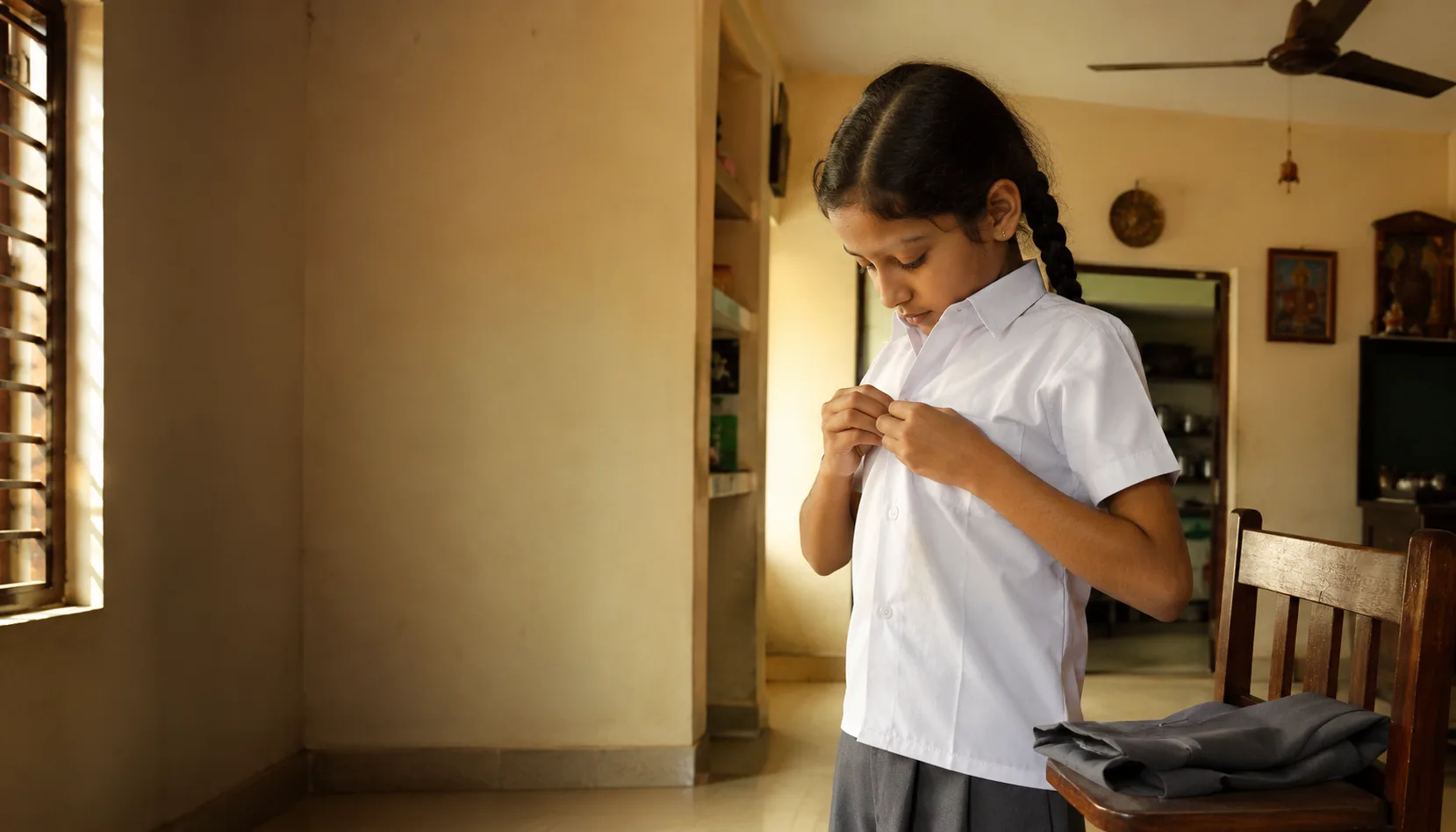
A mother in your neighbourhood posted a request for girls' school uniforms in sizes 8 to 10 - her daughters need them before the new term. A woman in a shelter home 7 km from your home posted a request for everyday salwar kameez in sizes M and L. A community organisation 4 km away posted a request for children's winter clothing for the families they support.
These requests are reviewed and verified by CauseKind's admin team before they go live. The identity, the need, and the location are all confirmed. What you see on the platform is a real, specific, verified need from a real, specific, verified person or organisation.
Stage 2 - The Match: Your Clothes Find Their Person
When you list your clothes on CauseKind, the platform's matching system shows your listing to recipients within 10 km whose requests match your items.
Alternatively, if you browse existing requests and find one that matches what you have, you can accept the match directly.
Either way, the match is specific:
- Your listing: 'Women's salwar kameez, sizes M and L, 6 items, good condition'
- Their request: 'Women's everyday salwar kameez, sizes M-L, for 4 women in our shelter home'
The platform connects you. Both parties receive a notification. The handoff is arranged.
Stage 3 - The Handoff: 10 km, In Person, Direct
All CauseKind clothing donations are completed through a direct, local handoff within 10 km.
You and the recipient - or a representative of the receiving organisation - arrange a meeting point: at your building gate, at a local landmark, at the organisation's premises. Most handoffs take 10 to 15 minutes.
This is not just a logistical choice. It is the moment where the donation becomes human.
Many donors describe the handoff as the most meaningful part of the giving experience - the moment the abstract impulse to give becomes a specific connection with a specific person. Some recipients, particularly in organised shelter homes, send a representative who can share a brief word about the community that will receive the items.
The handoff is not required to be emotional. But it often is, quietly.
Stage 4 - Confirmation: How CauseKind Verifies Your Clothes Arrived
After the handoff, both parties confirm receipt through the CauseKind platform.
The recipient confirms: the items were received, they match the description, they are in the condition stated.
You confirm: the handoff was completed.
This mutual confirmation is what distinguishes CauseKind's system from self-reported delivery confirmation. Neither party can confirm unilaterally. The confirmation requires both donor and recipient to acknowledge the completed handoff.
This mutual confirmation is the most important verification step in the entire process - it is the moment the delivery is recorded as confirmed.
Stage 5 - The Impact Certificate: Your Proof of Arrival
After mutual confirmation, CauseKind generates your Impact Certificate.
The certificate contains:
- Your name and donation details
- The items donated (category, quantity, condition)
- The recipient (anonymised to protect privacy, but verified)
- The date and location of delivery
- A unique verification code that links to the live donation record
- CauseKind's digital verification signature
This is not a receipt. A receipt records a transaction. An Impact Certificate records a confirmed outcome - that your specific clothes reached a specific verified person on a specific date.
You can share this certificate, keep it for your records, or use it for CSR documentation if donating as part of a corporate programme.
Stage 6 - In Use: What Your Clothes Become
This is the part nobody gets to see - and the part that matters most.
The school uniform you donated is worn by a child on Monday morning. She did not know that the previous owner lived 6 km away. She knows that the uniform fits, that it is clean, that she looks like her classmates.
The salwar kameez set you donated is worn by a woman at her first job interview since leaving a difficult situation. She did not know who donated it. She knows she feels presentable. That feeling matters.
The children's winter clothing you donated keeps three siblings warm through November and December in a city that does not get very cold but cold enough, when you do not have enough layers, to make school uncomfortable and sickness more likely.
Your clothes do not stop having a life when they leave your wardrobe. They continue into someone else's.
The journey of a donated item - from your home to someone's life - is more specific, more traceable, and more human than most donors ever get to see.
CauseKind's platform makes the full journey visible: the verified request, the local match, the direct handoff, the mutual confirmation, the Impact Certificate.
You know where your clothes went. You know they arrived. And somewhere in your neighbourhood, someone is wearing them.
Start Your Clothing Donation on CauseKind → Browse Verified Clothing Requests Near You → Read the Complete Guide to Donating Clothes →
CauseKind is India's verified giving platform. Zero fees. Admin-verified listings. Every donation matched within 10 km and tracked to delivery.