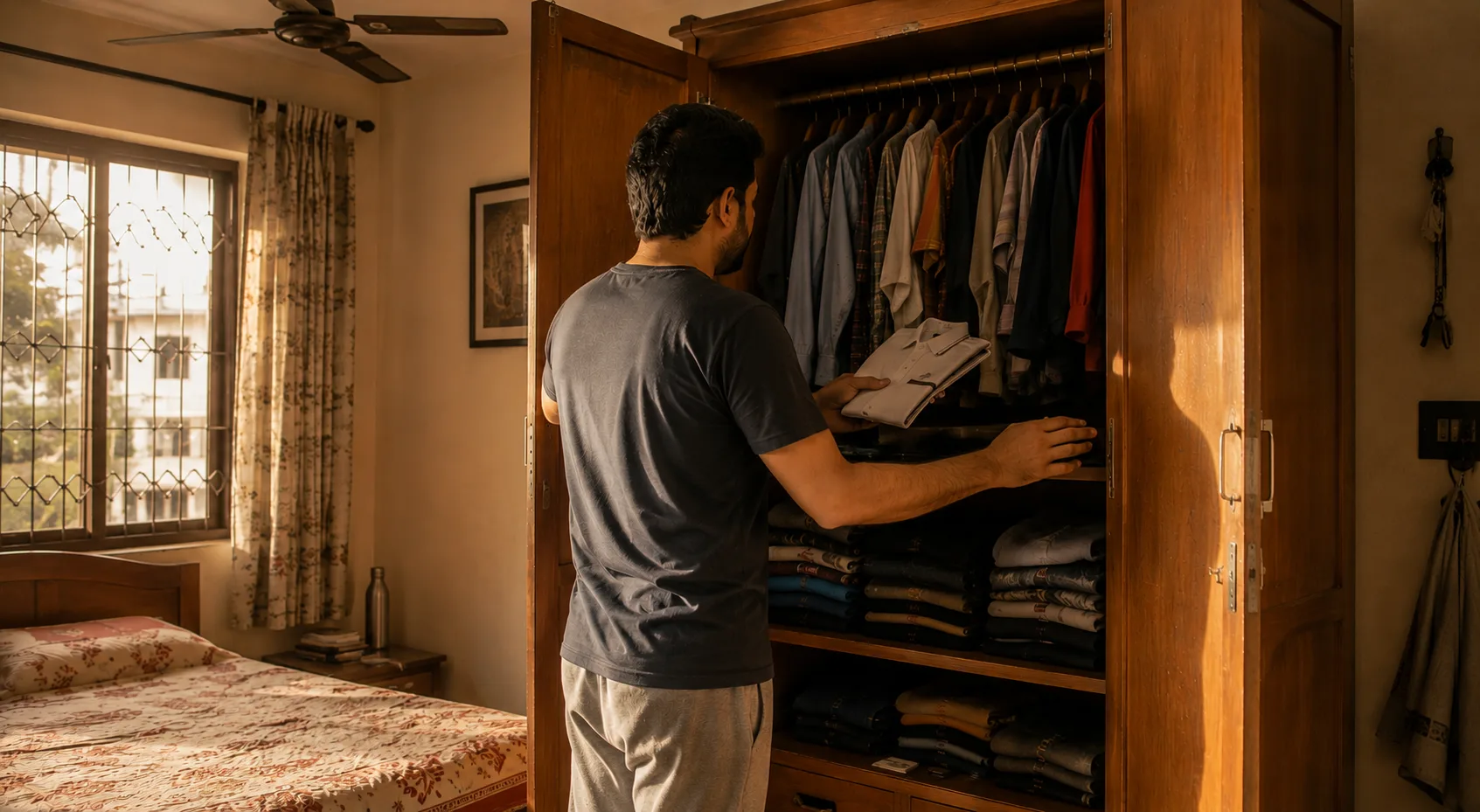
India's wardrobes are full.
Not in a comfortable, well-organised way - in the specific way of a country that produces, purchases, and accumulates clothing at a pace that outstrips its ability to use, store, or thoughtfully discard it.
The average urban Indian household generates a significant surplus of clothing every year: children's clothes outgrown too fast to wear out, school uniforms replaced when the size changes or the design is updated, festival clothes worn once and then stored indefinitely, adult clothing that no longer fits, no longer suits, or no longer has a place in a wardrobe that has moved on.
At the same time, millions of families across India need clothing they cannot afford. Children in government schools need uniforms. Families in informal settlements need warm clothing before winter. Girls in shelter homes need basic everyday wear. Women rebuilding their lives need professional clothes for job interviews.
The distance between your surplus and their need is almost always shorter than you think.
This is the complete guide to donating clothes in India - what to donate, what condition it needs to be in, how to prepare it, where it goes, and how to make sure it reaches someone who genuinely needs it.
What Clothing Donations Are Most Needed in India
Not all clothing donations are equally useful. Here is what is consistently most needed, by category:
Children's Clothing (Highest Demand)
- School uniforms - white shirts, formal trousers, skirts in children's standard sizes
- Everyday casual wear - t-shirts, kurtas, frocks, shorts, leggings
- Monsoon clothing - raincoats, waterproof ponchos for school-going children
- Winter clothing - sweaters, jackets, full-sleeve shirts for October through January
- School shoes and rubber chappals
Women's Clothing (Shelter Homes and Rehabilitation Centres)
- Everyday salwar kameez, sarees, and western wear in wearable condition
- Professional/semi-formal clothing for interviews and workplaces
- Winter clothing - shawls, cardigans, sweaters
- New undergarments (new and sealed only - never used)
Men's Clothing (Shelter Homes and Rehabilitation Centres)
- Formal shirts and trousers for workplaces and interviews
- Everyday kurta-pyjama and casual wear
- Winter clothing
New Items (Always Needed, Always Sealed)
- Undergarments for all genders - new, sealed, never donated used
- Socks - children's and adult sizes
- New items purchased specifically to donate are always welcome
The Condition Standard: What CauseKind Accepts and What It Does Not
The most important rule in clothing donation is this: donate items you would genuinely be comfortable giving to someone you respect.
Not 'good enough to give away.' Good enough to give.
Accepted clothing condition:
- Clean and washed (not wrinkled from storage, not damp)
- All fastenings working - buttons intact, zippers functional, hooks in place
- No major stains that washing will not remove
- No tears, fraying, or damage that affects wearability
- Appropriate for the recipient - not culturally or contextually unsuitable
Not accepted - do not donate:
- Torn, frayed, or significantly damaged items
- Items with permanent stains
- Damp or unwashed clothing
- Used undergarments (no exceptions)
- Extremely out-of-fashion items that would make the wearer stand out uncomfortably
- Festival or occasion wear with no practical daily use for someone rebuilding their life
- Items stored for long periods that smell of must or damp
How to Prepare Clothes for Donation
Preparation takes 20 minutes and makes an enormous difference to the recipient experience.
Step 1 - Sort ruthlessly
Go through items one by one. Hold each one up. Apply the condition standard above. If it passes, it goes in the donation pile. If it does not, it goes in the disposal pile - do not let it become someone else's problem.
Step 2 - Wash everything
All donated clothing should be freshly washed and completely dry before it is packed. This is non-negotiable. A recipient should be able to wear a donated item the same day without washing it first.
Step 3 - Fold or roll neatly
Packed neatly = received respectfully. Clothes stuffed loosely into a bag communicate carelessness. Clothes folded and sorted by category communicate care.
Step 4 - Sort by category and size
Group: children's clothes together, adult women's together, adult men's together. Within each group, sort by approximate size. This makes distribution significantly easier for the recipient or organisation.
Step 5 - Label the bags
A simple label - 'Children's clothes, ages 6-10' or 'Women's salwar kameez, sizes M-L' - saves the recipient significant sorting time and makes the donation immediately more useful.
Where to Donate Clothes in India
There are several channels for clothes donation in India, each with different advantages:
CauseKind In-Kind Platform (Recommended)
Post your clothes or browse specific clothing requests from verified recipients within 10 km. Every recipient is admin-verified. Every delivery is tracked and confirmed with an Impact Certificate. Zero fees. Matches your specific items to specific people who have asked for them.
Registered NGOs and Shelter Homes
Many NGOs accept clothing donations directly. Ensure the organisation has current 80G registration and a clear description of who they serve. Call ahead to confirm what sizes and types they currently need before dropping off.
Goonj
A national organisation specialising in dignity-centred clothing redistribution. They have collection points in major cities and a structured quality and distribution process.
Robin Hood Army
Primarily known for food redistribution, but many chapters also accept and distribute clothing and essentials.
Your Building's Collection Drive
Housing society collection drives, organised through CauseKind, can aggregate clothing from many households and distribute to verified recipients with a single coordinated delivery.
What to Avoid
Avoid donating through unverified WhatsApp appeals, unknown Facebook groups, or street-side collection bins with no clear organisational affiliation. Without verification, there is no assurance your clothes reach anyone in need.
What Happens After You Donate Clothes on CauseKind
On CauseKind's platform, the journey of your donated clothes is fully tracked:
- You list your clothes (category, size range, condition, quantity) or match an existing request
- A verified recipient confirms they want the items
- You arrange a local handoff - within 10 km, at a time that suits both
- The recipient confirms receipt through the platform
- You receive your Impact Certificate - a verified record of exactly what was donated, who received it, and when
You know where your clothes went. You know they arrived. And the person who needed them knows someone in their neighbourhood chose to give them specifically.
Special Categories: School Uniforms and Monsoon Clothing
Two clothing categories deserve particular attention because of the time-sensitive nature of their need.
School Uniforms
School uniforms are needed before every new school term - primarily April-June and November-December. A uniform donated in June can keep a child in school for an entire academic year. When donating uniforms:
- Specify the style (white shirt + grey trousers, or school-specific if known)
- Include the approximate class or size of the child who wore it
- Ensure it is clean and in correct, wearable condition
- Donate both top and bottom together if possible
Monsoon Clothing
Waterproof ponchos, raincoats, and rubber footwear are needed from May through September. These are almost never included in standard donation drives but are urgently needed by school-going children in low-income households. A children's raincoat costs ₹200 to ₹500 new - and donated in May, it keeps a child in school through four months of monsoon.
Frequently Asked Questions
Where can I donate clothes in India?
You can donate clothes in India through CauseKind's verified In-Kind platform (matches your clothes to specific recipients within 10 km), registered NGOs, Goonj collection points, Robin Hood Army chapters, or housing society collection drives. Always verify the organisation before donating.
What condition should donated clothes be in?
Donated clothes should be clean, washed, and in wearable condition - no major stains, no tears, all fastenings working. Never donate damp, unwashed, or damaged clothing. The test: would you be comfortable giving this to someone you respect?
Can I donate used undergarments?
No. Undergarments should always be donated new and sealed. This is a non-negotiable hygiene and dignity requirement. Used undergarments, regardless of condition, should not be donated.
How do I donate school uniforms in India?
List your child's old school uniforms on CauseKind, specifying the size and approximate class worn. Verified families nearby who need uniforms for their children can match the request. Ensure uniforms are clean and in wearable condition before donating.
Do I get a tax benefit for donating clothes in India?
Direct in-kind clothing donations do not qualify for 80G tax deduction. However, purchasing clothes specifically to donate as part of a corporate CSR programme may qualify as eligible CSR expenditure. Consult your CA for specific guidance.
Clothing donation is the most accessible form of in-kind giving in India - almost everyone has items to give, and the need is consistent and significant across the country.
The difference between a donation that helps and one that creates a burden is preparation - washing, sorting, labelling, and matching to a specific verified need.
CauseKind handles the matching and the verification. You handle the preparation.
Together, the result is a child in a clean uniform, a woman in a warm sweater, a family with what they need to face the season ahead.
Donate Clothes Through CauseKind → Browse Clothing Requests Near You → Read: What Clothes Should Not Be Donated → Read: How to Prepare Clothes for Donation →
CauseKind is India's verified giving platform. Zero fees. Admin-verified listings. Every donation matched within 10 km and tracked to delivery.