Furniture is the hardest thing in a home to give away. A shirt fits in a bag. A study table does not fit in a car, a lift or a hurried afternoon. So the sofa goes to the scrap dealer, the cot sits on the balcony, and the chairs wait another monsoon.
Yet a table and chair can change a student's year, and a cot can give a family a safe place to sleep. If you want to donate furniture in India, the effort is rewarded, as long as you plan it. This guide covers what to give, what to leave out, how to prepare it, how to handle the move and how to donate furniture in India to a request that really needs it.
Why Furniture Is the Hardest Thing to Donate
Three practical problems get in the way.
Size. Furniture needs space to store and a vehicle to move. Many collection points simply cannot take it.
Transport. Someone has to carry it, and in many cities that means stairs, narrow lifts and housing society rules.
Condition. Small faults that do not matter at home, like a wobbly leg or a loose hinge, make an item unusable for someone who has no way to repair it.
The result is that good furniture ends up in the bin while someone nearby goes without. Anyone who wants to donate furniture in India runs into these three problems sooner or later. The fix is not more goodwill. It is matching an item to a person who has asked for it, and agreeing the move beforehand.
Which Furniture Can Be Donated: Sofas, Couches, Bed Frames, Chairs
Not every piece is right for every recipient. These are the items that most often find a good home:
- Beds and cots, with their frames and slats
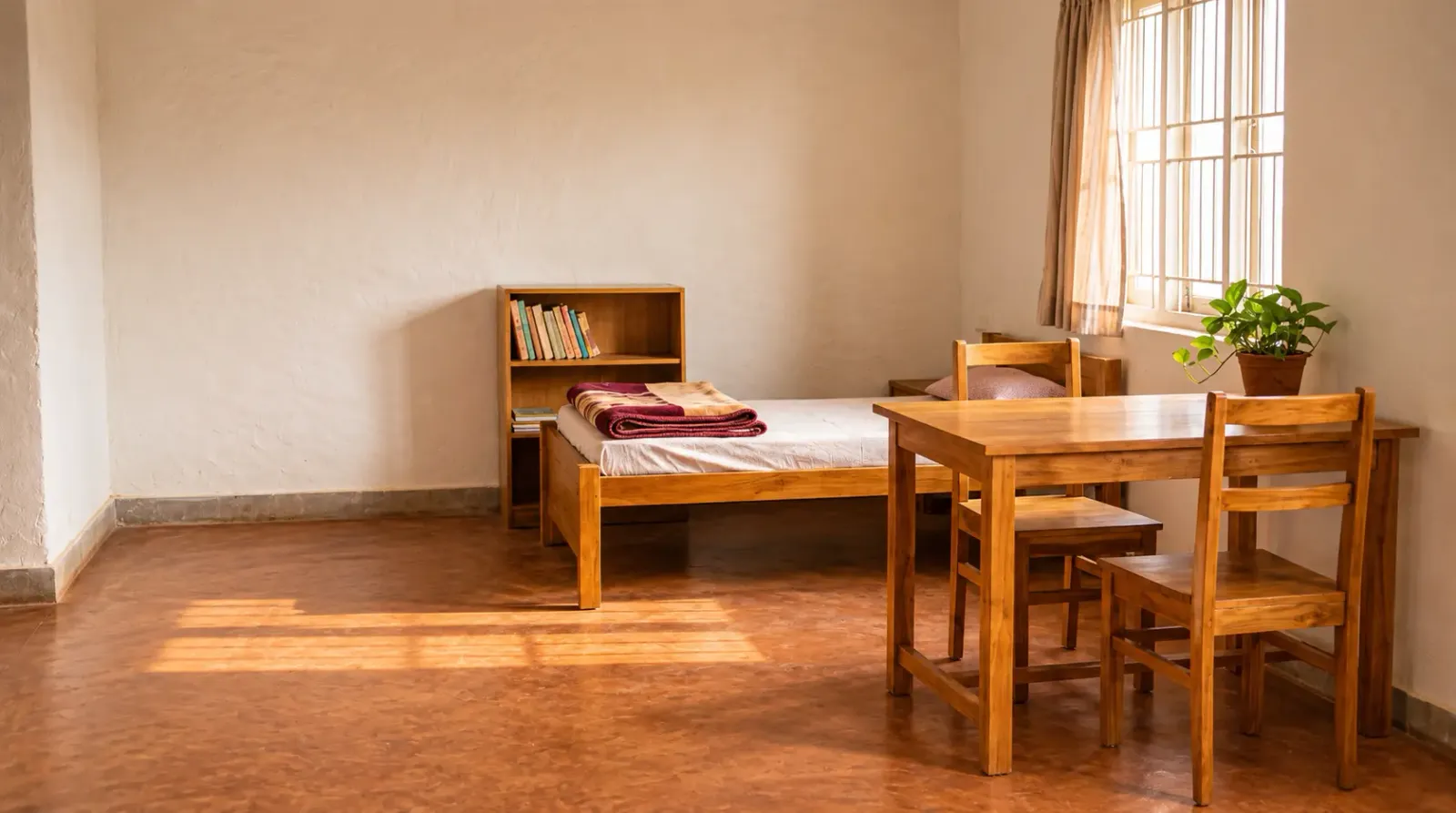
- Study tables and chairs for students and learning centres
- Wardrobes and storage cabinets that close properly
- Bookshelves and racks
- Dining tables and stools for shelters and hostels
- School desks and benches in good shape
Sturdy solid-wood and metal pieces last longest. Furniture made of pressed board is fine if it is dry and intact, but it does not survive damp or rough handling.
Furniture You Should Not Donate
Giving something that cannot be used creates work and sometimes risk. Please leave these out:
- Anything broken, cracked, wobbly or unsafe to sit on or sleep on
- Furniture with insect infestation, mould or a damp smell
- Stained or sagging mattresses
- Cots or cribs with missing slats or parts, which are a safety hazard
- Pieces with exposed nails, splinters or sharp edges
- Items that are too large to move through a standard door or lift
The question to ask is simple: would I be comfortable if my own family used this? If the answer is no, recycle it instead.
How to Get Furniture Ready to Donate
Preparation decides whether your donation is accepted.
- Clean it. Wipe down every surface and let it dry completely in the sun or shade.
- Check for damage. Test the legs, joints, drawers and hinges. Fix small faults if you can.
- Take clear photos. Show the front, back and any marks. Honest photos save everyone a wasted trip.
- Measure it. Note the height, width and depth. The recipient needs to know it will fit.
- Dismantle if possible. Flat pieces are easier to move. Keep screws and fittings in a labelled bag taped to the item.
- Empty it. Remove everything from drawers, wardrobes and shelves.
Pickup, Transport and Society Rules
This is where most furniture donations succeed or fail.
Before you list an item, agree on three things with the recipient:
- Who moves it. Will you deliver it, will the recipient collect it, or will you share the cost?
- When. Choose a time when the lift and the access route are free.
- What permissions are needed. Many housing societies require a gate pass or a note before large items leave the building. Check your society's rules early.
If you can, let the person collecting the furniture know the floor, whether there is a lift, and how wide the doorway is. These small details prevent a failed pickup.
How to Donate Furniture in India Through CauseKind
CauseKind connects your furniture to a verified request, so it goes where it is needed.
- Browse verified requests. Open verified in-kind requests and look for furniture, or see furniture donation requests near you.
- Choose a request you can meet. Check the item, quantity, size and condition asked for.
- Pledge your donation. Listings are verified by CauseKind admins before they go live.
- Arrange the move. Follow the delivery instructions on the listing. Donations are matched within 10 km where possible, which keeps transport short and simple.
- Receive your Impact Certificate. Delivery is confirmed and documented, and you get a verified certificate showing where your furniture went.
There are zero fees for donors. Our post on how local donation matching works in India explains why nearby matching matters most for heavy items.
Why Local Matching Suits Furniture Best
Moving a table across a big city costs money and time, and many donations fail for exactly that reason. When furniture is matched to a request nearby, the journey can be a short drive instead of a day-long operation.
In crowded cities where homes are small and moves are frequent, this makes a real difference. People often have furniture to spare at the moment they move house or renovate, which is when planning is hardest and local help is most useful.
If you are clearing a whole home, bundle your donations, because a single organised handover is the easiest way to donate furniture in India without repeated trips. Our guides to organising an item donation drive in India and to the benefits of in-kind donations can help you decide what to give and when.
Measure Before You List
Most furniture handovers that fail, fail at the door. Indian flats often have narrow stairwells, small lifts and doorways under 80 cm, so a sofa that came in assembled may not leave the same way. Measure the height, width and depth of the piece, and the narrowest point it has to pass through, before you list it.
Put those numbers in your listing, along with the floor you are on and whether there is a lift. Say which parts come apart: bed frames that unbolt, table legs that unscrew, wardrobe doors that lift off their hinges. A receiver who knows a cot dismantles into four flat pieces can plan a single auto trip instead of hiring a tempo.
Keep the screws, Allen keys and brackets together in a labelled bag and tape it to the frame. Missing hardware is the most common reason a donated bed or shelf ends up unused.
Give the Piece You Would Want to Receive
Furniture is a quiet kind of giving. Nobody sees the table once it is in a classroom or the cot once a family has made the bed. But everyone who sits at it or sleeps on it feels the difference.
Choose items in good shape. Photograph them honestly. Plan the move before you promise anything. That is how you donate furniture in India without it becoming a burden for anyone.
A solid chair in the right place is worth more than a full truck of things nobody asked for.
Setting up a home needs more than furniture, so see how to donate kitchen utensils in India as well.
See How CauseKind Verifies Every Donation → Browse Verified In-Kind Requests Near You → See How Impact Certificates Work → Create Your Free CauseKind Account →
CauseKind is India's verified giving platform. Zero fees. Admin-verified listings. Every donation matched within 10 km and tracked to delivery with a verified Impact Certificate.