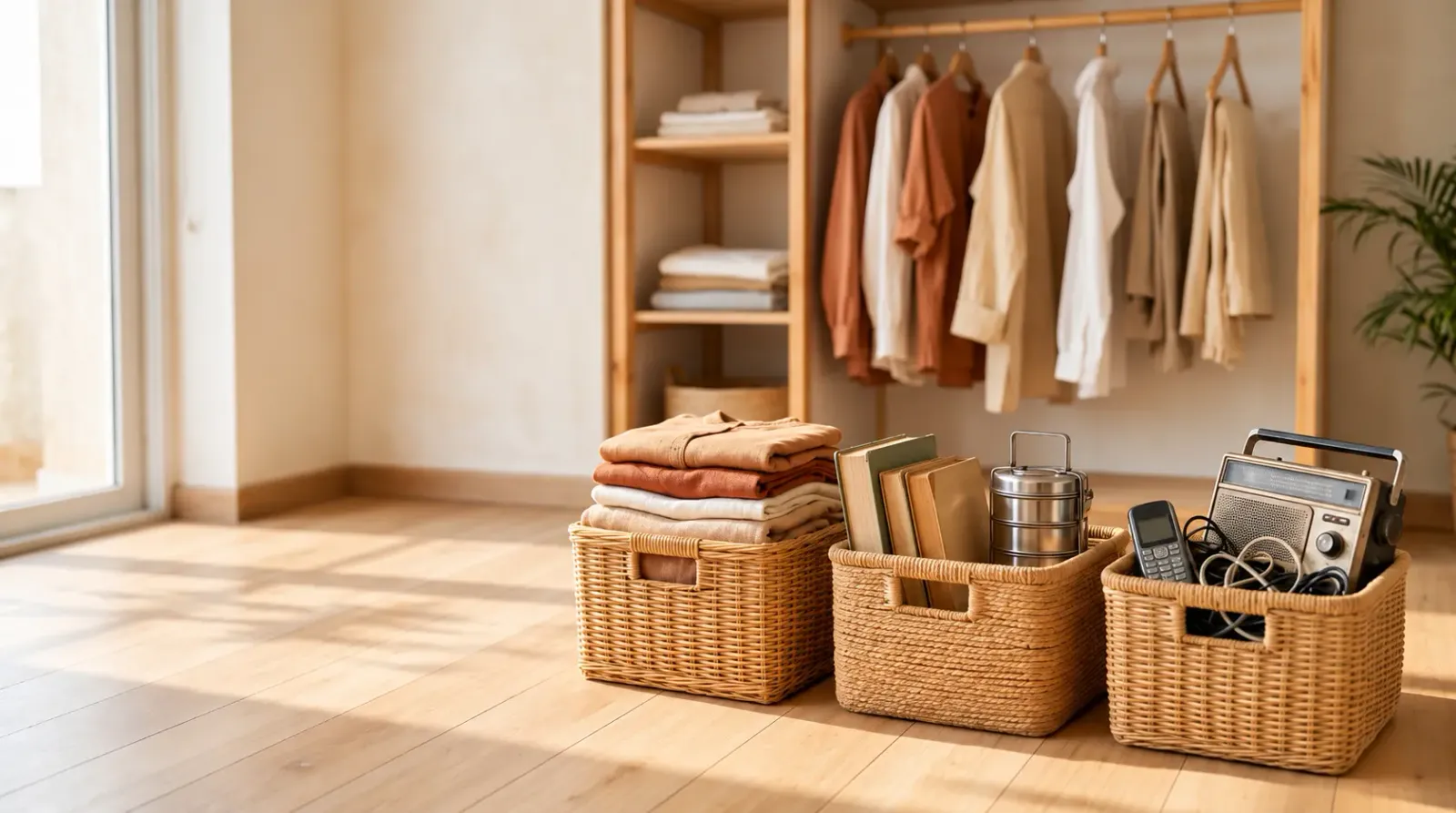
Every home collects things it no longer uses: a spare phone, outgrown clothes, a chair that does not fit the new room, a drawer of cables. Most of us keep them for years because we do not know what to do with them.
The answer is not complicated. Almost every old item belongs in one of three places: sold, donated or recycled. This guide gives you a quick way to decide what to do with old items in India, so that things get used again instead of piling up or going to the bin.
The Three Questions That Decide Everything
Ask these questions in order, for every item:
- Does it have real resale value, and is it worth the effort of selling? If yes, sell it.
- If not, is it clean, working and useful to someone else? If yes, donate it.
- If not, is it broken, unsafe or beyond use? Then recycle or dispose of it properly.
Selling is for things with value, donating is for things with use, and recycling is for things with neither. Keeping this order in mind makes almost every decision easy.
When to Sell
Selling makes sense when an item is in good condition, in demand and easy to move. Branded electronics, good furniture, quality books and some appliances can bring a fair price.
The cost is time. You have to take photos, answer messages, negotiate and arrange collection. If the item will sell for very little, the effort may not be worth it. Be realistic, and set a deadline: if it does not sell in two weeks, donate it.
When to Donate
Donate items that are clean, complete and useful, even if they are worth little in money. A good winter blanket, a working pressure cooker or a set of school books can matter far more to a person who needs them than the few rupees you would get for them.
This is where in-kind giving is strongest. Our Ultimate Guide to In-Kind Donations in India explains how to give well, and the benefits of in-kind donations shows why it works.
When to Recycle or Dispose
Some items should not be donated: broken, unsafe, soiled or worn out. Cracked electronics, dead batteries, damaged protective gear and torn bedding belong here.
Electronics and batteries need extra care because they contain materials that should not go into ordinary rubbish. Use an authorised recycler or a proper collection point. Our post on donating versus recycling electronics in India explains the difference.
A Quick Guide by Item
| Item | Usually best |
|---|---|
| Clothes in good condition | Donate |
| Worn, stained or torn clothes | Recycle or dispose |
| Branded or newer electronics | Sell, or donate |
| Broken or very old electronics | Recycle properly |
| Sturdy furniture | Donate or sell |
| Damaged furniture | Dispose |
| Books and school material | Donate |
| Kitchen utensils in good shape | Donate |
| Blankets and bedding (clean) | Donate |
| Safety gear that is cracked or old | Dispose |
When in doubt, remember: if you would not be comfortable using it yourself, it should not be donated.
Get Items Ready Before You Decide
Clean and check everything first. A quick wipe and a test often turns a "maybe" into a clear yes.
- Clothes: wash, dry and fold. See how to prepare clothes for donation in India.
- Phones and laptops: erase personal data before selling or donating. Our guide on how to erase personal data before donation in India explains how.
- Furniture: clean it and check for damage. See how to donate furniture in India.
- Books and utensils: see our guides on books and kitchen utensils.
How to Donate Through CauseKind
When the answer is "donate", CauseKind connects your item to a person who asked for it.
- Browse verified requests. Open verified in-kind requests and look for what you have.
- Choose a request you can meet. Check the items, quantity and condition asked for.
- Pledge your donation. Listings are verified by CauseKind admins before they go live.
- Deliver. Requests are matched within 10 km where possible, so the journey is short.
- Receive your Impact Certificate. Delivery is confirmed and documented.
There are zero fees for donors. You can read how nearby matching works in How Local Donation Matching Works in India.
Clear One Shelf at a Time
You do not need to sort the whole house in one day. Start with one drawer, one shelf or one cupboard, and apply the three questions.
If you want a deadline to help, our post on donating one item per month shows how a small monthly habit clears space and helps others.
Ask One Person Before You Decide
Before you sell, donate or recycle something, ask the people around you first. A domestic worker, a driver, a security guard or a neighbour may need exactly the fan, mattress or school bag you are about to clear. Asking takes a minute, and the item reaches someone you already know will use it.
If no one nearby needs it, move to a verified request. The order matters: personal networks first, then local requests, then sale or recycling. Items travel the shortest distance and reach real use soonest.
Keep a small box by the door for things that are clearly going out. When it is full, sort it in one sitting. Clearing in small batches makes the decision easier than facing a whole storeroom at once.
Knowing What to Do With Old Items in India
Knowing what to do with old items in India makes the whole process lighter. Sell what has value. Donate what is useful. Recycle what is finished.
Clean items, honest decisions and a verified recipient are all you need.
Most old things have one more good use left. The only task is to find where.
See How CauseKind Verifies Every Donation → Browse Verified In-Kind Requests Near You → See How Impact Certificates Work → Create Your Free CauseKind Account →
CauseKind is India's verified giving platform. Zero fees. Admin-verified listings. Every donation matched within 10 km and tracked to delivery with a verified Impact Certificate.